

Why you should monitor your pipelines

Replacing older pipeline infrastructure is expensive, resource-intensive, and often unnecessary. Continuous monitoring with the Asset Monitoring Platform (AMP) allows you to maximize the lifespan of your current pipes, prevent defects before they happen, and cut down on both capital cost and carbon footprints.
When dealing with aging infrastructure, the traditional approach has often been straightforward: if a pipe has been in the ground for a certain number of decades, it must be scheduled for replacement. This approach assumes that installation age perfectly correlates with material failure, but in reality, many older pipes remain structurally sound long past their estimated expiration dates.
Thus, tearing up kilometers of functional infrastructure simply because of its age carries a high cost that could be delayed or avoided.
Why replacing pipelines is not always the answer
Managing an underground pipeline network means protecting thousands of kilometers of steel infrastructure that communities rely on daily. Over time, environmental factors cause changes in your infrastructure that could turn into an unexpected failure.
When visibility is limited, it is easy to default to time-based replacement schedules. But full-scale excavation and replacement projects carry heavy downsides:
- High operational costs: Manufacturing, transporting, and installing new steel or plastic pipes requires significant financial investment.
- Community disruption: Street excavations lead to traffic delays, permits, and service outages for your customers.
- Resource waste: Discarding older pipes that are still structurally sound sends perfectly functional materials to scrap or landfills.
Instead of guessing when a pipe might fail based on its installation date, you want clear visibility into the actual physical health of your infrastructure.
Moving from time-based to condition-based maintenance
Shifting from a time-based strategy to condition-based maintenance allows you to make decisions based on your pipeline’s health rather than age estimates or yearly checkups. Continuous monitoring measures the actual degradation rates (such as dropping voltage in a cathodic protection system or decreasing insulation resistance in a district heating pipe), so you only intervene when the physical parameters dictate it.
- Extend asset lifetime: Older steel and insulated pipes are often highly resilient, but they require targeted oversight. Continuous tracking lets you identify the specific sections of your network that require maintenance, allowing you to keep functional materials in service longer and reduce capital expenditures.
- Lower operational costs: Manual field checks only offer a temporary snapshot of your infrastructure, leaving you exposed to hidden leaks for the rest of the year. The Asset Monitoring Platform (AMP) automates anomaly detection, catching subtle changes in soil conditions and asset health before they turn into expensive emergency repairs.
- Increase workforce efficiency: Instead of sending field mechanics on routine site visits across thousands of kilometers, your operations teams receive automated alerts when thresholds are breached. This shift ensures you only deploy field resources where they are actually needed.
Monitor your essential pipeline network with the Asset Monitoring Platform
Balancing fixed budgets with strict safety and compliance standards is a significant challenge.
The Asset Monitoring Platform (AMP) delivers the necessary data required to understand what is occurring across the grid without manual, time-consuming inspections.
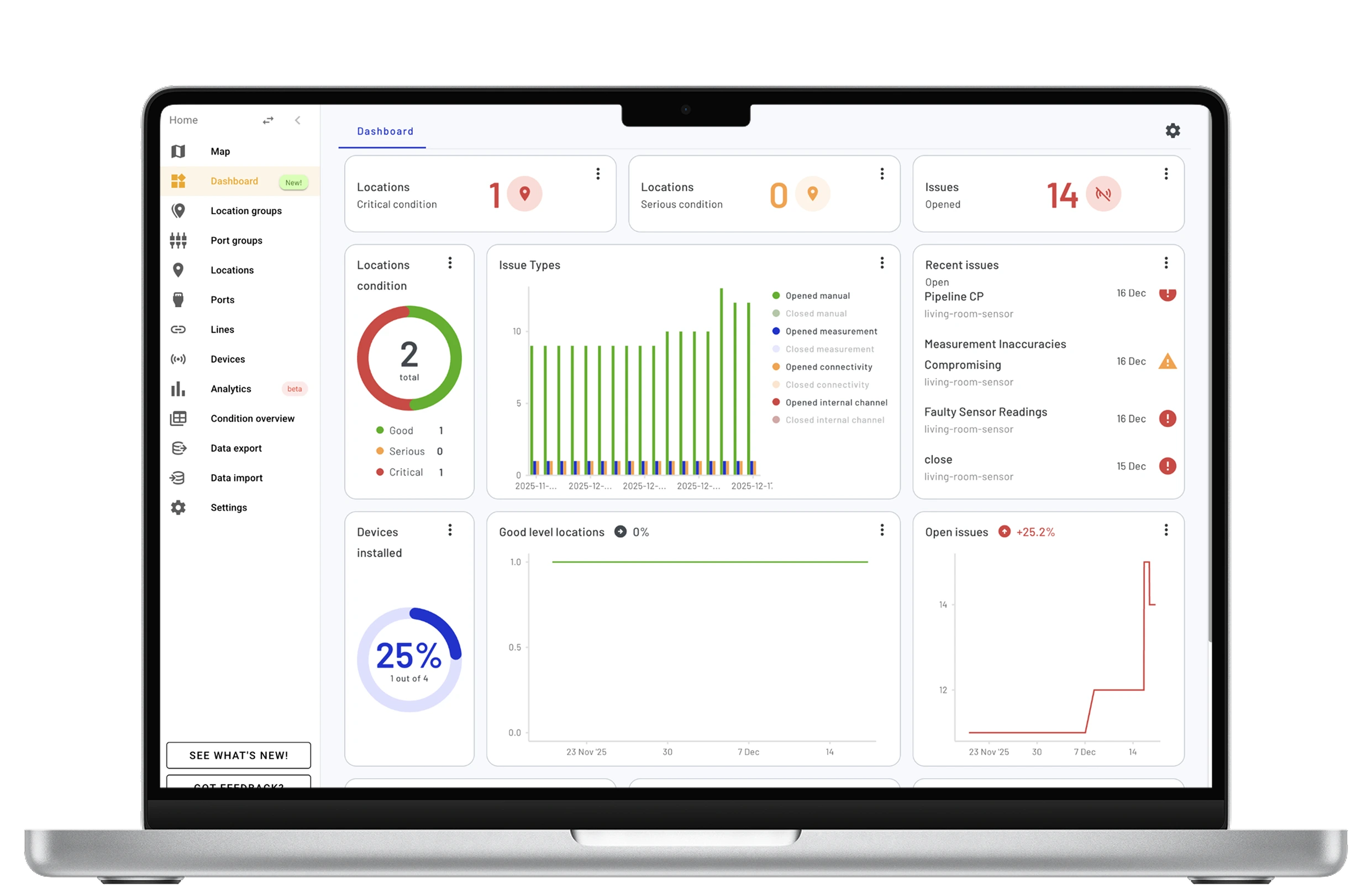
The AMP provides:
- Asset health tracking: View your network status across all locations from a single live map. You can set specific thresholds to flag structural anomalies early, ensuring your teams see exactly where intervention is needed.
- Dashboards and visualization: Review incoming telemetry data through clear, structured views. The platform lets you examine individual sensor measurements and export reports to support targeted maintenance decisions.
- Issue triggers and alerts: Filter notifications automatically based on urgency levels to protect your operations desk from alert fatigue. When a threshold is breached, you can assign the issue directly to a team member for quick resolution.
Securing your infrastructure and maintaining a reliable network does not require rebuilding everything from scratch. It is about working smarter with the assets you already own.